
ManningBooks
GPU Programming with Triton (Manning)
Until recently, writing GPU kernels for LLM training and inference meant learning low-level programming tools like CUDA and C++. Triton, an open source, Python-based DSL created by OpenAI, bridges the gap between high-level machine learning frameworks and low-level GPU programming. Triton is built into PyTorch 2 and backed by NVIDIA, Intel, AMD, and Red Hat.
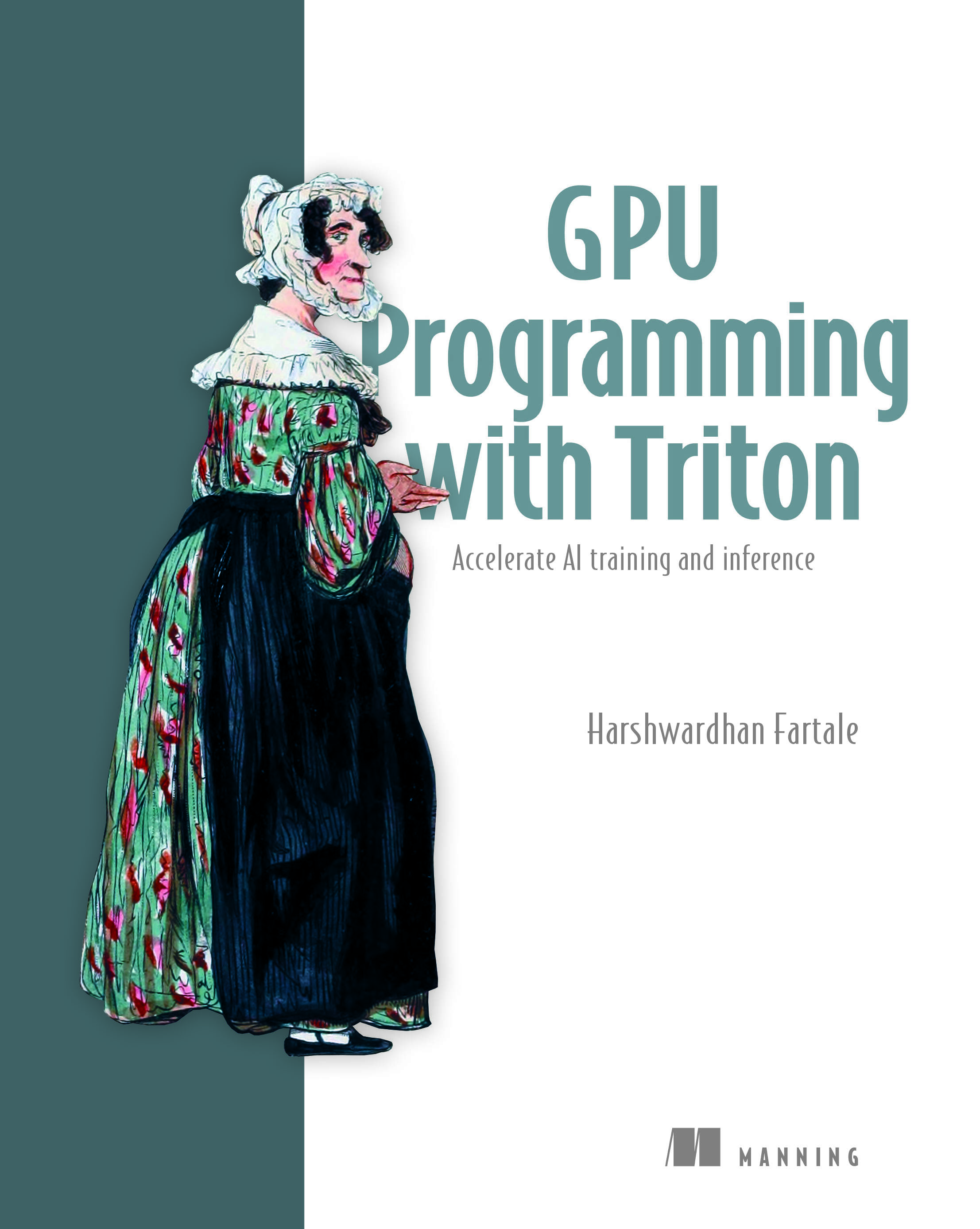
Harshwardhan Fartale
If you’re working with AI training or inference and want more control over GPU performance, you might be interested in GPU Programming with Triton by Harshwardhan Fartale.
The book explores how to use Triton to write efficient custom GPU kernels in Python—without having to work directly in CUDA C++. Readers will learn how GPUs execute programs, how to build and optimize Triton kernels, and how to apply those skills to real AI workloads. It also covers practical techniques for identifying bottlenecks and improving the performance of training and inference.
It’s currently available through Manning’s Early Access Program, so the content will continue to develop as new chapters are released.
- Full details: GPU Programming with Triton - Harshwardhan Fartale
Don’t forget you can get 45% off with your Devtalk discount! Just use the coupon code “devtalk.com” at checkout 
Popular Ai topics

Other popular topics




Sponsor Spotlight
We build reliable cloud platforms for business-critical systems.

Categories:
Sub Categories:
Popular Portals
- /elixir
- /rust
- /wasm
- /ruby
- /erlang
- /phoenix
- /keyboards
- /python
- /js
- /rails
- /security
- /go
- /swift
- /vim
- /java
- /clojure
- /typescript
- /emacs
- /haskell
- /svelte
- /onivim
- /kotlin
- /react
- /c-plus-plus
- /crystal
- /tailwind
- /gleam
- /ocaml
- /elm
- /vscode
- /flutter
- /html
- /ash
- /deepseek
- /zig
- /opensuse
- /php
- /centos
- /react-native
- /scala
- /lisp
- /sublime-text
- /textmate
- /nixos
- /debian
- /deno
- /agda
- /django
- /kubuntu
- /nodejs
- /arch-linux
- /ubuntu
- /spring
- /revery
- /manjaro
- /quarkus
- /julia
- /diversity
- /lua
- /laravel
Devtalk Sponsors

Practical resources that improve the lives of professional developers.

We build trusted fault-tolerant systems that scale to billions of users.

Real-time error tracking, performance insights, and observability for devs.

Supporting innovation across the BEAM ecosystem.
We build reliable cloud platforms for business-critical systems.

Develop your skills with books, videos, and courses.
Catch errors, track performance, monitor hosts and more.

Enabling companies to succeed by building software people love.

Courses that move you from confusion to "Aha, now I get it!"

Publishing Linux Magazine, ADMIN, and MakerSpace for 25+ years.